

A common question when sizing screw conveyors is what speed should the screw conveyor run at? Of course, when we talk about the speed of a screw conveyor we are talking about how fast the screw in the trough is rotating. This rotation is measured in revolutions per minute, or how many times the screw spins in 1-minute. This is better known as RPM. The screw RPM is different than the motor RPM. The motor turns very fast, typically 1800 RPM. The screw typically turns very slow, typically 20 RPM to 150 RPM. There are a set of gears and sometimes belts between the motor and screw to slow the speed down from the motor’s 1800 RPM to screw’s slower RPM.
Back to the original question about figuring out the screw conveyor speed. The way the screw conveyor works is every time the screw rotates the material being conveyed is pushed along a certain distance. The more times the screw rotates the farther along the conveyed material is pushed over the same time. The distance the conveyed material is pushed every time the screw turns is determined by the pitch of the screw. The pitch of the screw
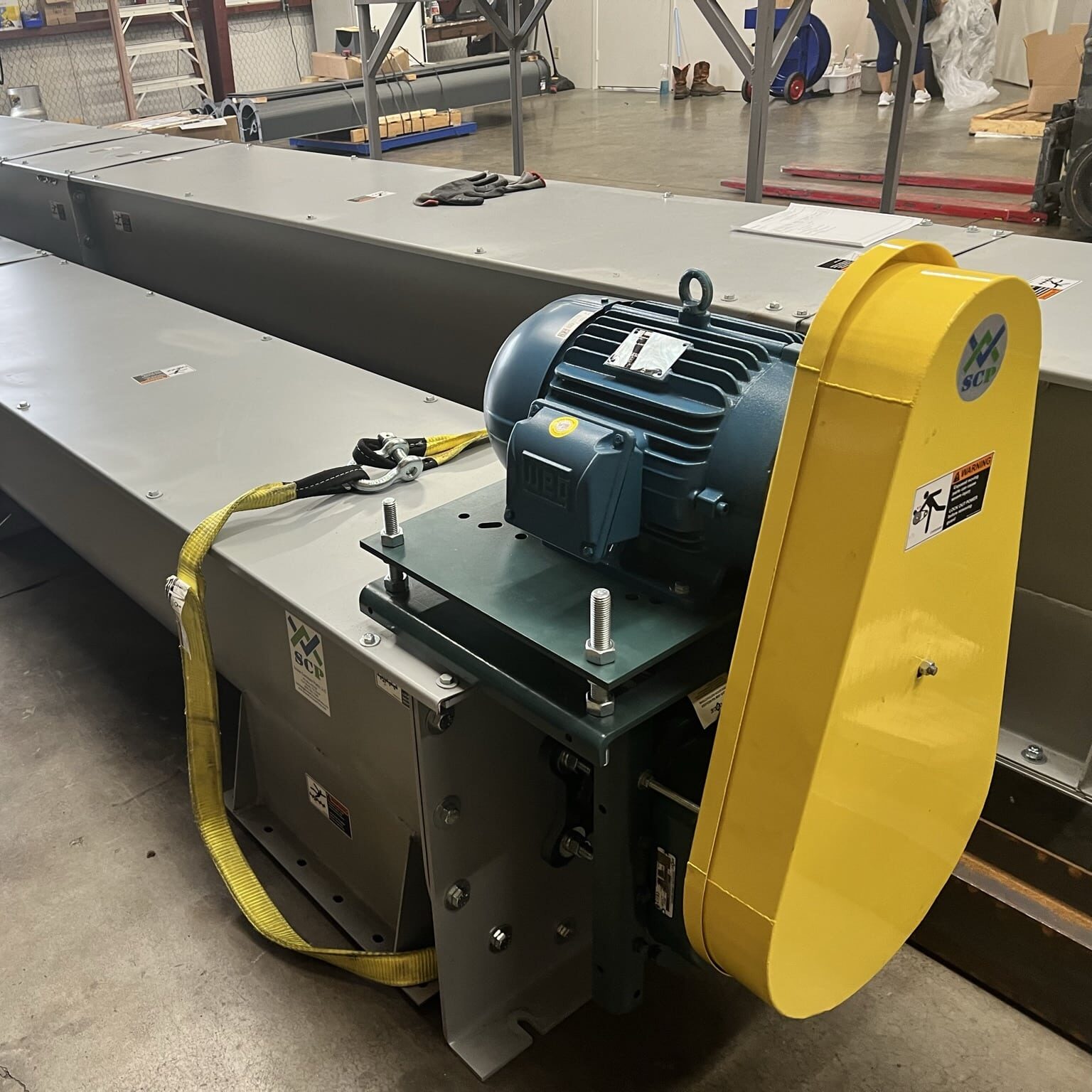
is the distance from one flight to the next.
How we figure out how fast the screw needs to turn is determined by a number of factors, including the screw outside diameter, screw pitch and how much material the screw conveyor needs to move over time. CEMA does publish a chart on the maximum speed a screw should spin based on the diameter and material type. These speeds tend to be very high if you want your screw conveyor to have a long and productive life.
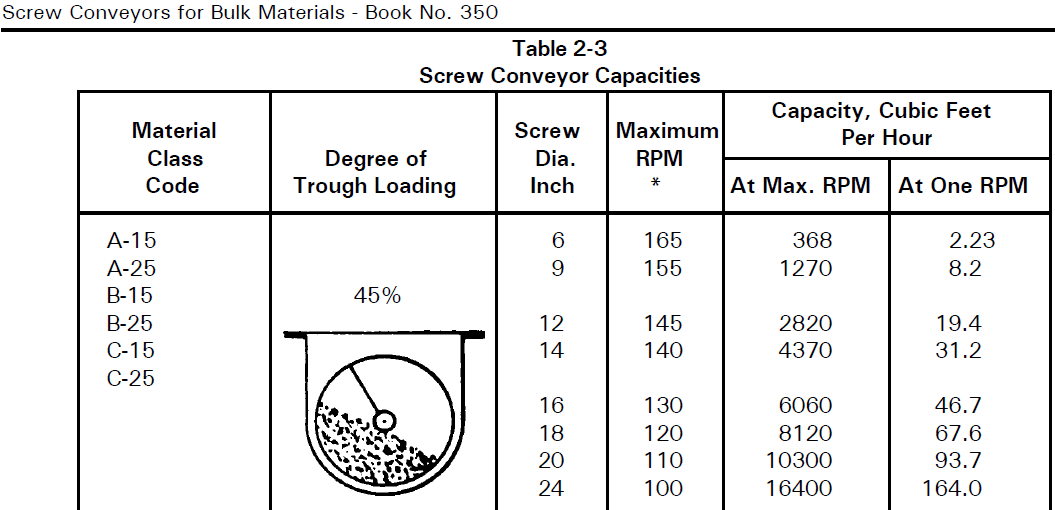
We typically consider 1/2 to 3/4 the CEMA recommended max speed to be ideal for most applications. At SCP, we try to standardize 40 rpm and 60 rpm. We use the slower RPM if we can but will go faster because it allows us to get more material conveyed through the same diameter screw conveyor. Since larger screw conveyors cost more money, use the smallest diameter screw conveyor possible saves money.
We have an article here about sizing a screw conveyor for a more detailed explanation.

