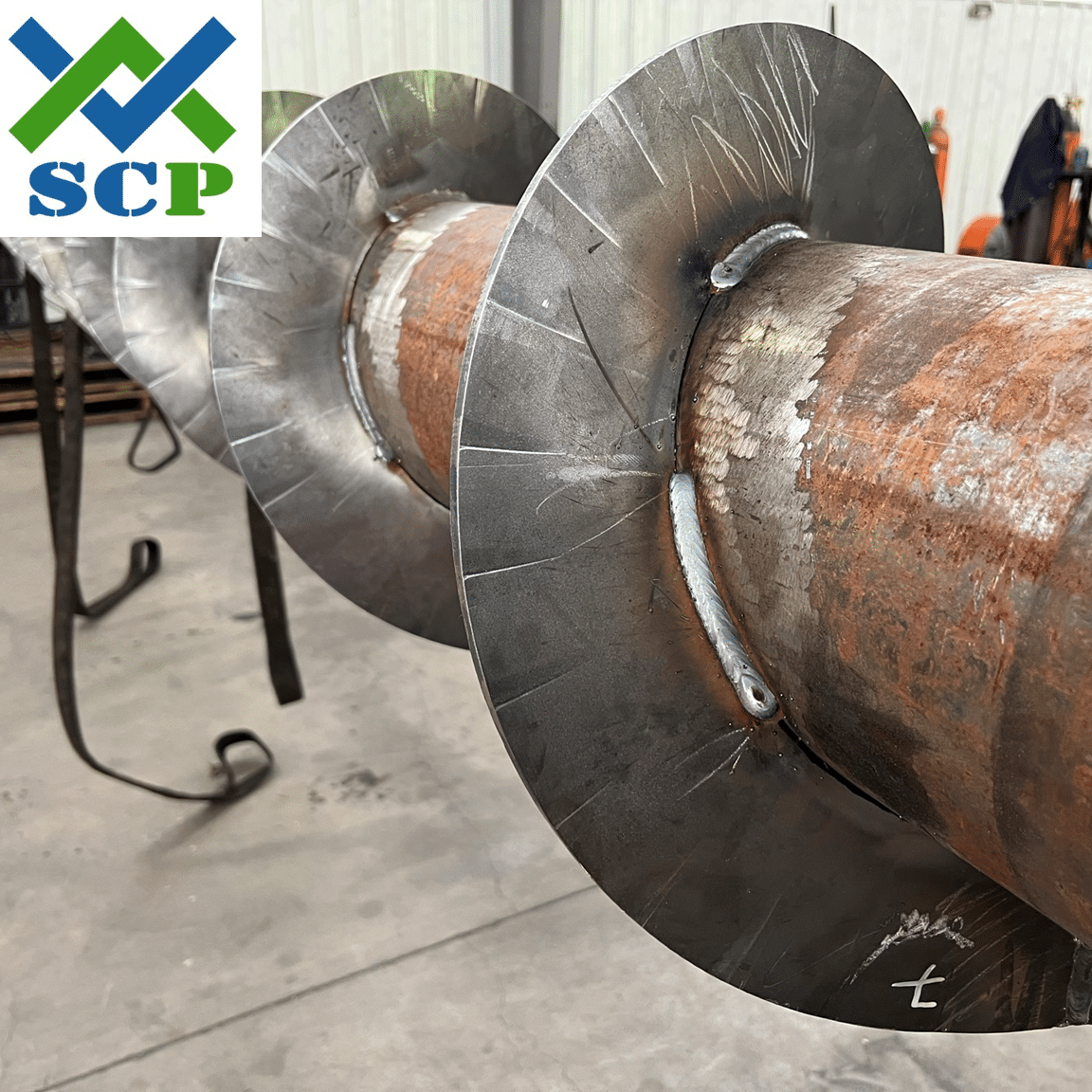
Before we discuss how to identify the pitch hand, lets discus why it matters if the screw flighting is right- or left-handed. The simple answer is, it does not…until it does. 95% of all screw are right-hand. Left-hand is only used in very specific instances like a screw feeder in a hopper with a center discharge where material needs to be pulled from the right and left side and discharged out the middle. Left-hand flighting is stocked in some common sizes, but typically finished screw are not stocked in left-hand flighting.
There are two common ways to determine if a screw is right- or left-handed flighting. The first is referred to as the hand method and the other as the end method.
The Hand Method
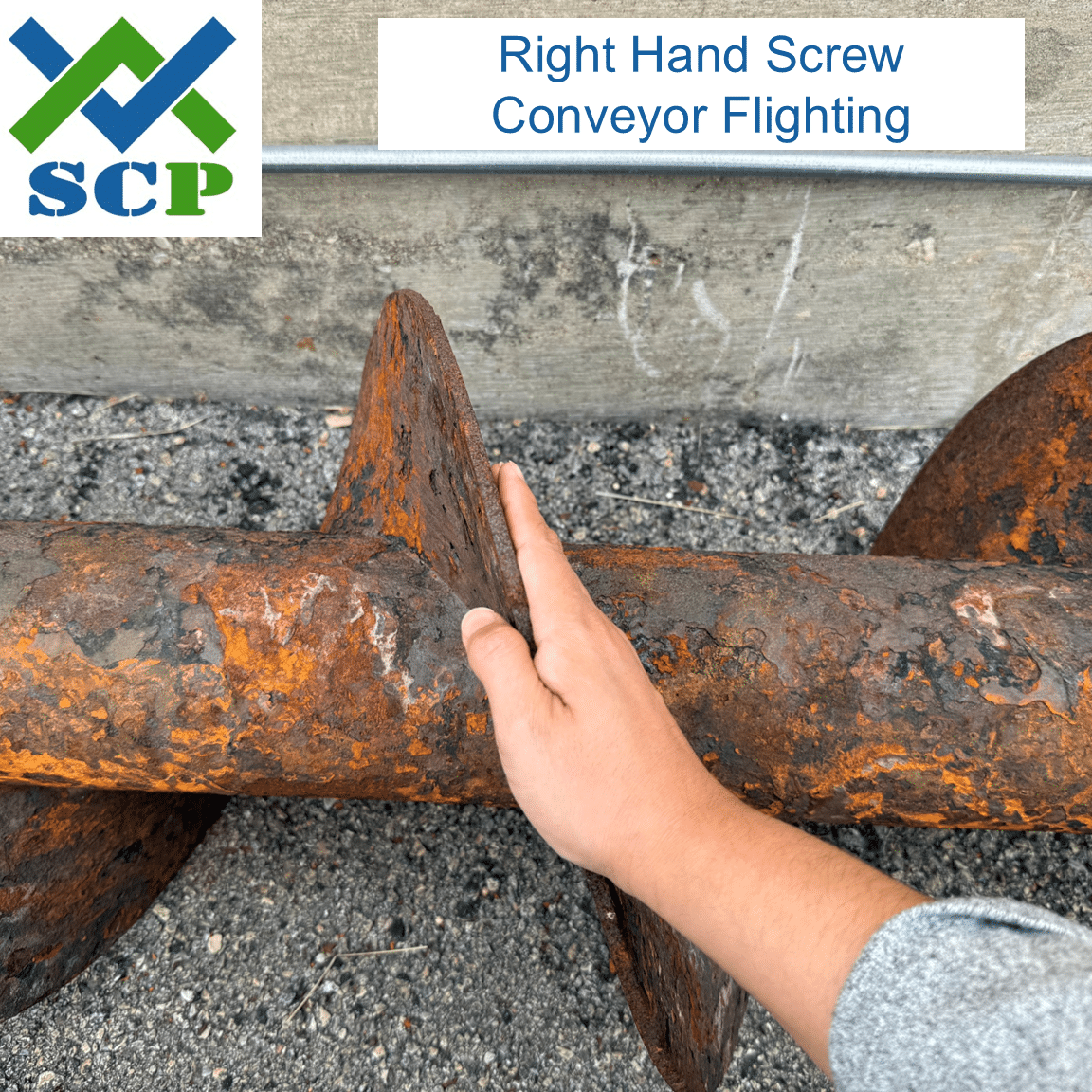
The hand method is the most common since it can be done by simply looking at the side of the screw. This is helpful when the screw in in the conveyor and the end can not be accessed. For this method simply put your hand along the face of the flighting. If your right hand lays flat, the screw is right-handed. If your left hand lies flat the screw is left-handed.
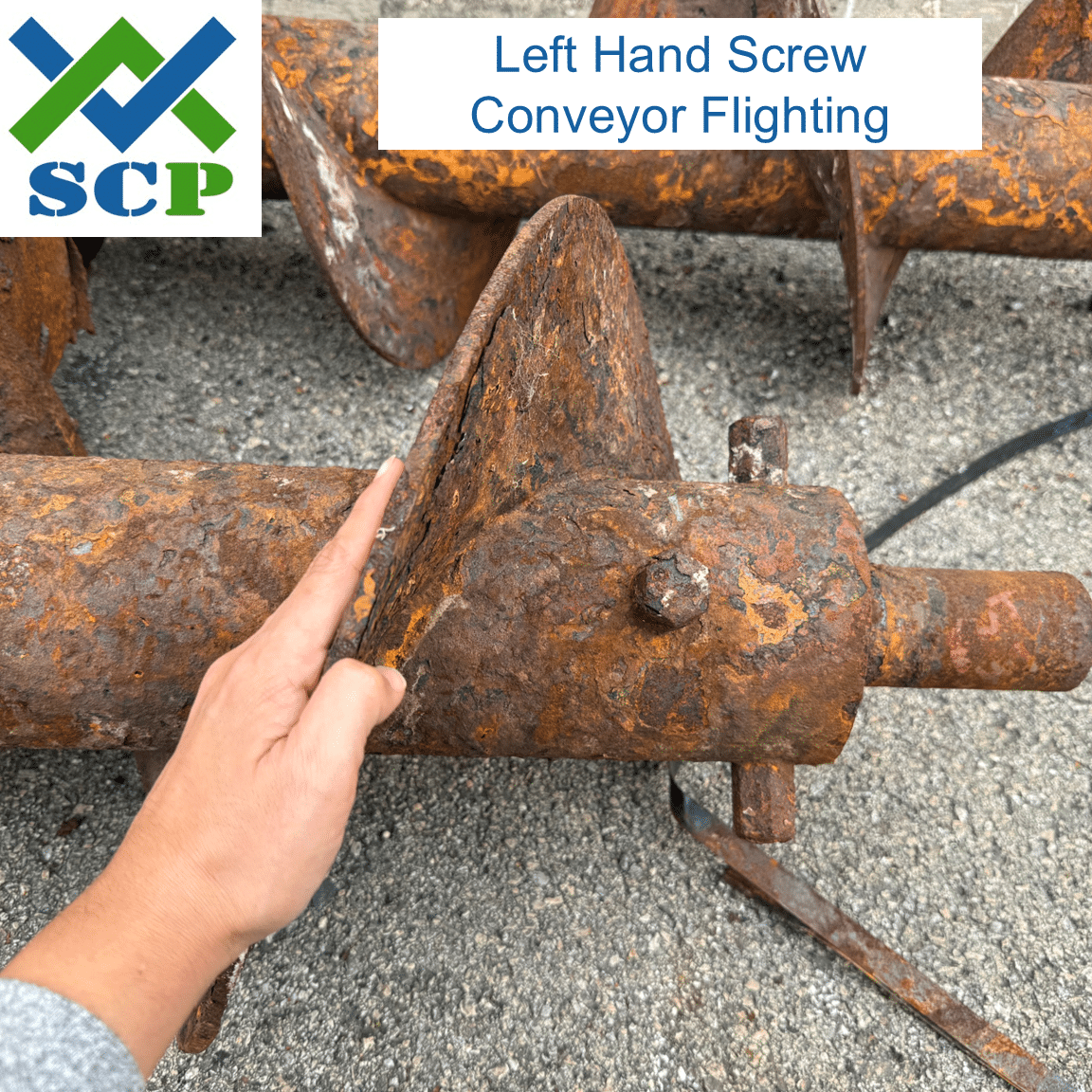
The End Method
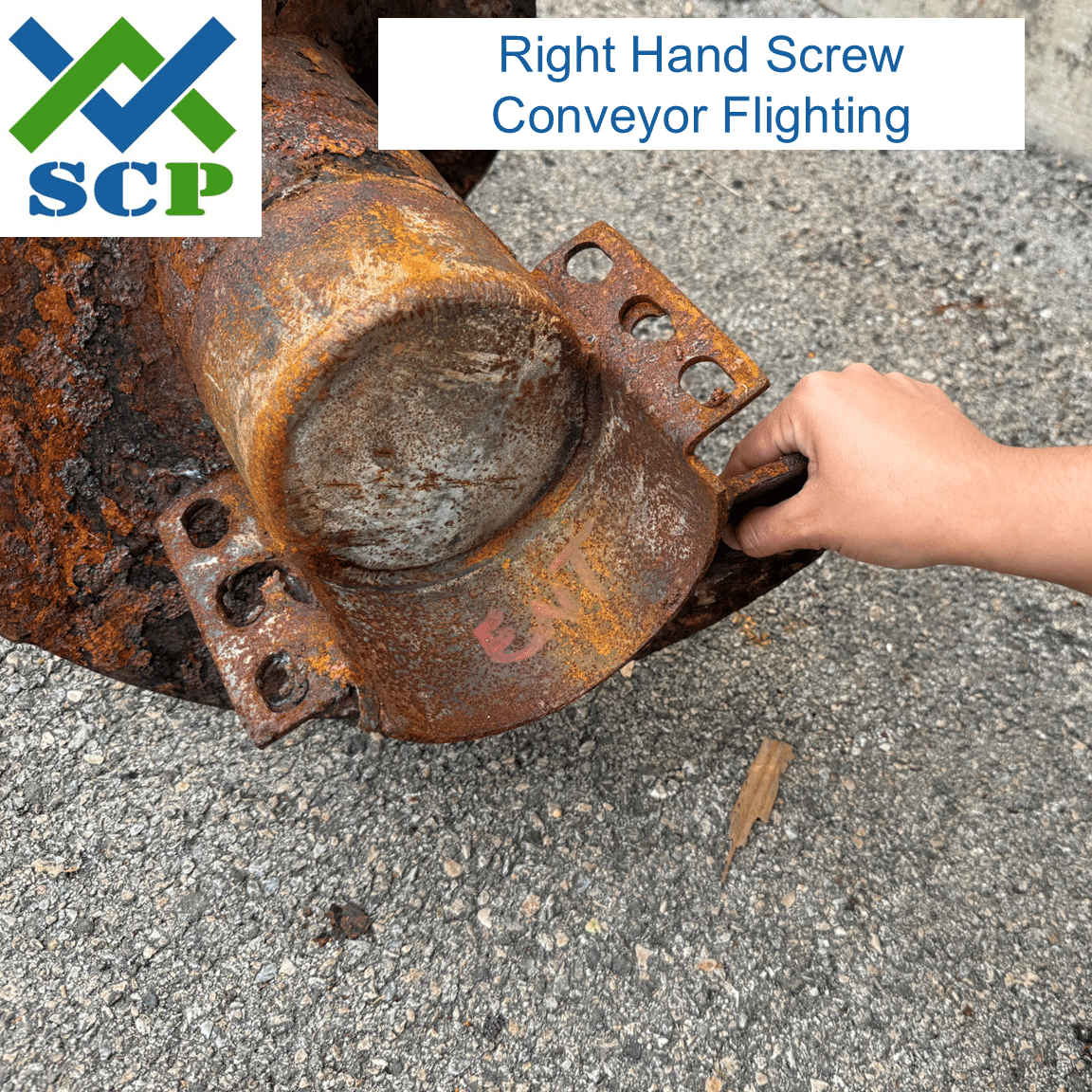
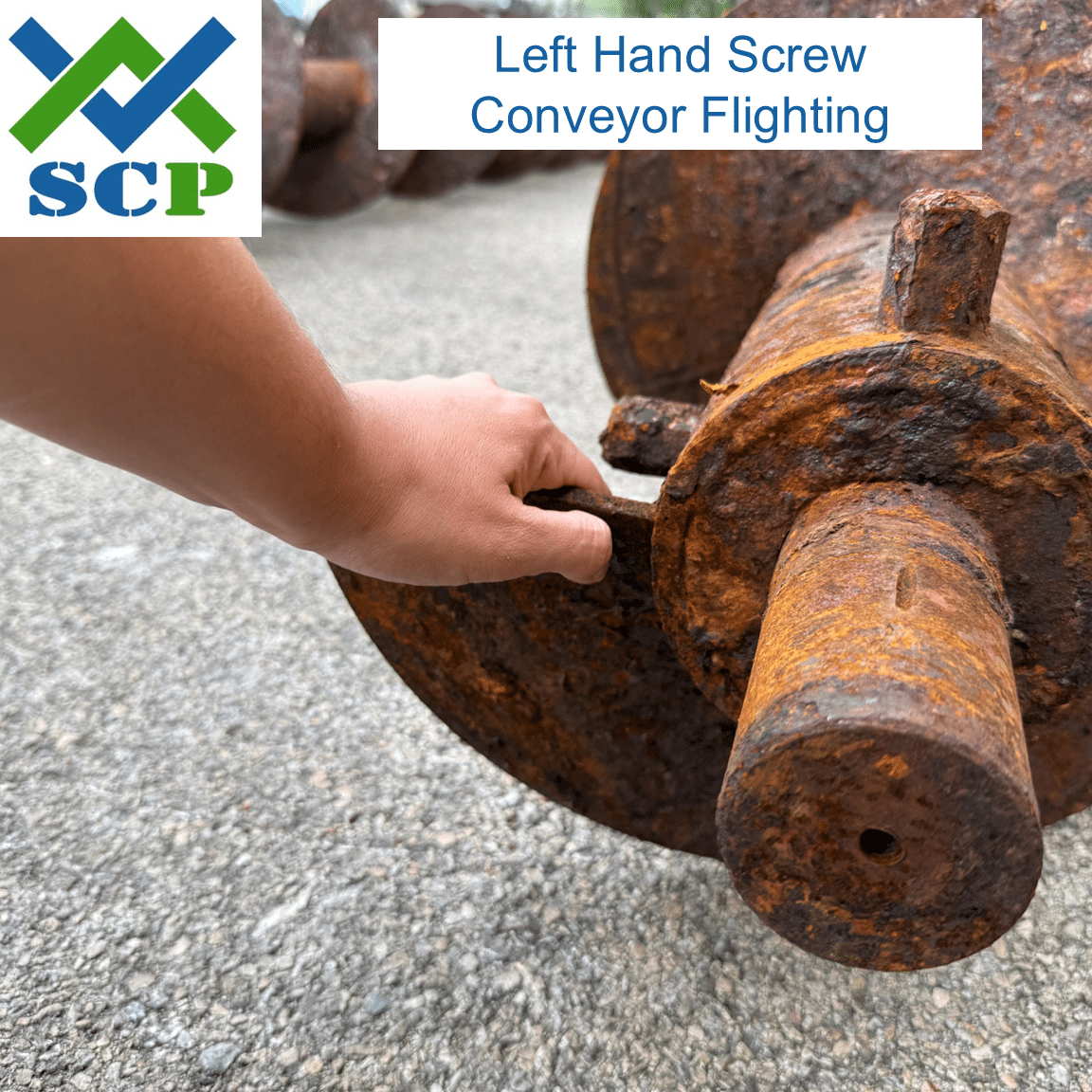
The end method is used when looking at the end of the screw. For the end method, look at the end of the screw where the flighting stops. If you can pull the edge of the flighting down with your right hand the screw is right-handed. If you can pull the edge of the flighting down with your left hand the screw is left-handed.